What to Write on a Sympathy Flower Card
Knowing what to write on a sympathy flower card can feel difficult. You want to offer comfort, but it may be hard to find words that feel sincere without saying too much.
A thoughtful message does not need to be long or perfectly written. In times of loss, a few honest words can remind someone that they are loved, remembered, and not alone.
This guide offers sympathy flower card messages for different relationships and situations, along with practical advice to help you write something personal and appropriate.
Begin with Your Relationship to the Recipient
The right message depends on how well you know the grieving person and whether you knew the person who passed away.
A message to a close friend can be warm and personal. A message to a colleague, client, or acquaintance may be shorter and more formal. If you knew the person who passed away, including their name or a meaningful memory can make your message feel especially sincere.
Before writing, ask yourself:
How close am I to the recipient?
Did I personally know the person who passed away?
Would a religious message be comforting to this family?
Is there a specific memory or quality I can respectfully mention?
Your answers will help you choose the right tone.
What to Write on a Sympathy Flower Card: Short Messages
A simple message is often enough, especially when space on the flower card is limited.
Consider one of these short sympathy messages:
With deepest sympathy.
Thinking of you and your family.
Sending you love and strength.
Holding you close in our thoughts.
Wishing you peace and comfort.
With heartfelt condolences.
Our thoughts are with you during this difficult time.
Sending our love and support.
May loving memories bring you comfort.
You and your family are in our thoughts.
These messages work well when you want to express support without assuming how the recipient is feeling.
Sympathy Messages for a Close Friend or Family Member
When someone close to you is grieving, your message can be more personal. You do not need to explain their loss or find words that will make the pain disappear. Simply acknowledge what happened and remind them that you are there.
Examples include:
I am thinking of you and sending all my love during this incredibly difficult time.
I wish I could take away some of your pain. Please know that I am here for you.
Sending you love, strength, and comfort as you remember someone so special.
You do not have to go through this alone. I am always here for you.
May the love surrounding you bring comfort in the days ahead.
I am holding you and your family close in my heart.
If you are offering specific help, make the offer clear:
I am thinking of you. I will call you this weekend, but there is no need to respond.
Sending you love. I will bring dinner on Thursday so you have one less thing to think about.
Specific support is often more helpful than writing, “Let me know if you need anything.”
Sympathy Messages When You Knew the Person Who Passed Away
If you knew the person who passed away, using their name can make the message feel more personal and meaningful.
You may also mention a quality you admired or a brief memory:
[Name] will always be remembered for their kindness and generous heart.
I feel fortunate to have known [Name]. Their warmth touched everyone around them.
I will always remember [Name]’s wonderful sense of humour and the joy they brought to others.
[Name] made a meaningful difference in so many lives and will be deeply missed.
May your memories of [Name] bring comfort and remain close to your heart.
It was a privilege to know [Name]. I am thinking of your family with love.
Keep the memory focused on the person being honoured and the comfort it may bring to their family.
Sympathy Messages When You Did Not Know the Person Who Passed Away
You can still write a caring message when you know the recipient but did not personally know their loved one.
Avoid pretending to understand the relationship or the full weight of the loss. Focus instead on supporting the person you know:
I am deeply sorry for your loss. I am thinking of you and your family.
Sending you strength and comfort during this difficult time.
Although I did not have the opportunity to know [Name], I know how much they meant to you.
I am keeping you close in my thoughts as you remember your loved one.
Wishing you moments of peace and comfort in the days ahead.
Sympathy Messages from a Workplace or Business
Sympathy flowers sent by colleagues or a company should feel compassionate without becoming overly personal.
Suitable messages include:
With heartfelt condolences from everyone at [Company Name].
Our entire team is thinking of you and your family.
Wishing you strength and comfort during this difficult time.
Please accept our sincere condolences. You are in our thoughts.
We are deeply saddened to hear of your loss and are thinking of you.
With sympathy and support from your colleagues at [Company Name].
If the flowers are being sent by several people, sign the card with the team, department, or company name so the recipient knows who sent them.
Religious Sympathy Messages
A religious message can be comforting when you know that it reflects the recipient’s beliefs. If you are unsure, choose a gentle, non-religious message instead.
Examples of Christian sympathy messages include:
May God surround you with comfort and peace.
Praying for strength and comfort for you and your family.
May God’s love carry you through the days ahead.
You and your family are in our thoughts and prayers.
May the promise of eternal life bring you peace and hope.
Praying that you feel God’s presence and love during this difficult time.
Religious wording should support the recipient’s faith rather than express assumptions about how they should understand their loss.
What Should You Avoid Writing?
Even well-intended phrases can feel dismissive when someone is grieving.
Consider avoiding statements such as:
Everything happens for a reason.
At least they lived a long life.
They are in a better place.
I know exactly how you feel.
You need to stay strong.
Time heals everything.
It was meant to be.
These phrases can minimize the person’s grief or make assumptions about their beliefs and emotions.
It is safer and more compassionate to acknowledge the loss directly:
I am so sorry for your loss.
I am thinking of you.
I am here with you.
[Name] will be deeply missed.
Should You Send Flowers to the Home or Funeral Service?
The delivery location should influence both the arrangement and the card message.
Flowers sent to the family’s home are a personal gesture of comfort. A hand-tied bouquet or vase arrangement can remind the recipient that someone is thinking of them during the quiet days surrounding or following the service.
Flowers delivered to a funeral or memorial service are generally intended as a more formal tribute. Before placing this type of order, confirm the service location, date, start time, recipient details, and whether the family has requested donations instead of flowers.
La Maison Flower Studio’s Daily Collection is best suited for thoughtful sympathy flowers delivered to a family member, friend, colleague, or loved one at their home or another confirmed address.
Remember to Include the Sender’s Name
One of the most common flower-card mistakes is forgetting to say who sent the arrangement.
Even if the recipient recognizes your writing style, they may receive several messages and deliveries at the same time. Always finish the card with your name, family name, team, or company.
For example:
With love, Sarah and Michael
Thinking of you, The Park Family
With heartfelt condolences, Your friends at Northview Homes
Before completing your order, review the spelling of the recipient’s name, the name of the person who passed away, and the sender’s name.
Choosing Flowers to Accompany Your Message
White and cream flowers are often selected to express peace, sincerity, remembrance, and quiet support. Soft pink, lavender, or other gentle colours can also be appropriate, particularly when they reflect the recipient or honour the personality of the person being remembered.
There is no rule requiring every sympathy arrangement to be entirely white. The most meaningful choice is one that feels respectful and personal.
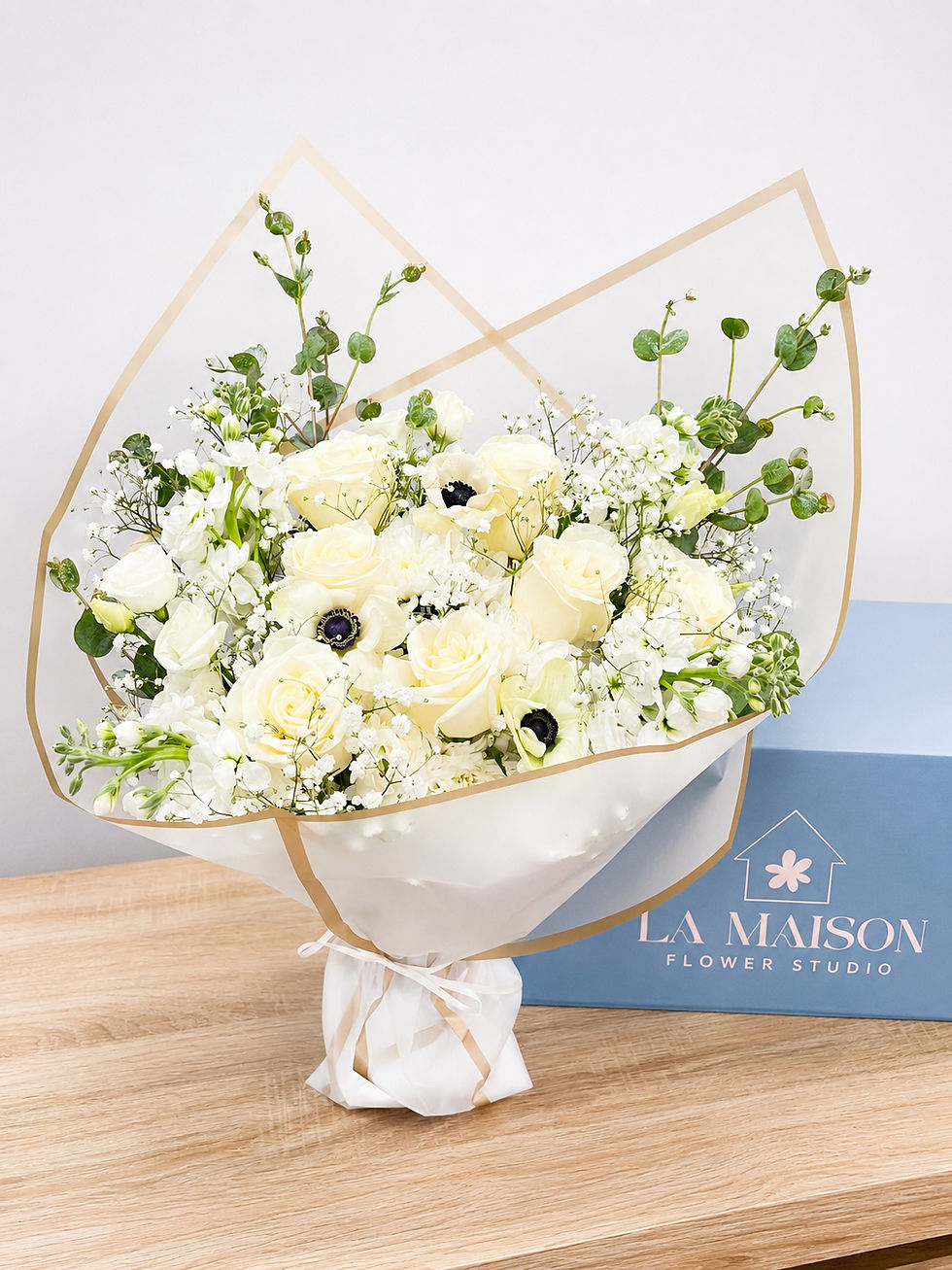
The White Tea by La Maison Flower Studio features an elegant white-and-cream colour palette designed to express peace and heartfelt sincerity. It is a thoughtful option for sending comfort to a loved one, friend, family member, or colleague.
A Thoughtful Message Does Not Need to Be Perfect
When deciding what to write on a sympathy flower card, sincerity matters more than finding flawless words.
Keep the message gentle, acknowledge the loss, and remind the recipient that they are in your thoughts. If you knew the person who passed away, include their name or a meaningful quality you will remember. Most importantly, sign the card clearly so the recipient knows who is thinking of them.
A few thoughtful words, accompanied by carefully chosen flowers, can offer a quiet reminder of love and support when it is needed most.


